Today's Guide to the Marketing Jungle from Social Media Examiner...
presented by 
Friday is almost here, Alluser! Before you unplug, here are the latest AI insights and updates for marketers. Whether you read them now or save them for later, you won't want to miss these.
In today's edition:
-
Discover what your audience is really searching for—faster
-
Personalizing AI output across multiple tools
-
🗞️ Industry news from OpenAI

Google Trends, Now With Gemini-Powered Context
What if spotting the next big trend didn't require hours of keyword digging? Feeling overwhelmed by the firehose of "what's trending"? This might just help you see what actually matters—for your content, your campaigns, and your customers.
Google just upgraded its Trends Explore tool with Gemini AI—and for small business marketers trying to stay current, this update could be a game-changer.
Instead of manually searching for related terms or building comparison charts, Google's AI now suggests rising topics, auto-fills trend graphs, and even recommends prompts to dig deeper. It's like having a data-savvy assistant who knows what your audience is curious about—before you even ask.
If you're the kind of marketer who loves following the numbers but doesn't have time to swim through them, this update brings real relief. With an easier interface and richer AI-powered insights, Google Trends is shifting from a research tool into a discovery engine. Read more here.
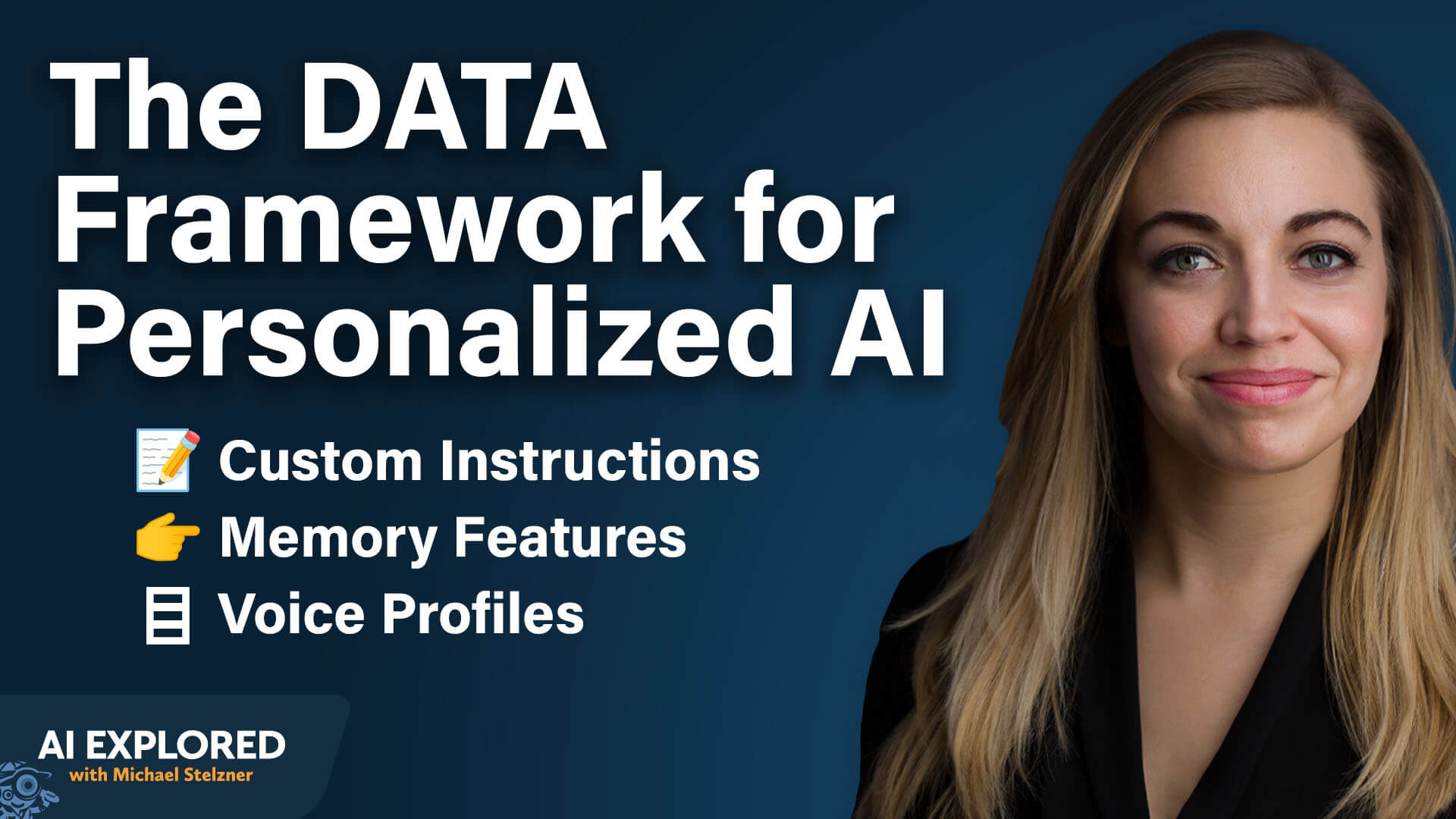
Personalizing AI for Business: Turning Generic Tools into Customized Solutions
AI tools like ChatGPT and Claude are powerful generalists. They don't know your business, industry, customers, or communication style.
Better results don't require the latest model. They require personalizing the tools you already use.
This article focuses on personalizing AI tools themselves—not using AI to personalize customer communications. We're teaching AI to understand your business, processes, voice, and goals so it delivers better, more relevant outputs.
The principle is simple: better inputs lead to better outputs.
You can personalize AI for individual use or build a corporate brain—shared intelligence any team member can access for subject matter expertise.
Start by improving what you feed into these models, then make it accessible.
How to Build an AI-Powered Knowledge Base to Facilitate DATA Access Across All Your Platforms
Rather than training individual custom GPTs or Gems on each platform, bring all your DATA together in one place.
This is knowledge management or enterprise search. It makes collected knowledge accessible and powerful.
Connect all your tools and platforms (Google Drive, Gmail, Slack, support tickets) to the enterprise search system. Then anyone on your team can query the system. It generates answers drawing only from sources and knowledge you provided. Responses include clickable citations showing exactly where AI pulled each answer.
Enterprise Tools to Put Unstructured Knowledge to Work
Guru stands out for its search capabilities plus knowledge agents and recurring verification schedules. Verifiers—subject matter experts or admins—review, edit, and verify responses within set timeframes.
As your team interacts with AI agents for different use cases, conversations, questions, and answers aggregate into a single view for verifiers to check.
This creates a self-improving system that gets smarter with use.
Glean offers another enterprise search option.
NotebookLM works similarly to Guru and Glean but with a key difference: you assign specific sources to a notebook. Answers come only from those designated files.
NotebookLM cites sources. Hover over any citation to see the exact excerpt, confirming information accuracy.
Here's a use case: An interior designer created extensive business resources—standard operating procedures, team checklists, email templates for high-end client communication. Her team struggled to adopt these resources.
She uploaded everything into NotebookLM, creating an interactive hub for team questions: What's our policy on this? How do we handle installation day?
Coveo provides enterprise-grade knowledge management with data encryption and HIPAA compliance. It empowers internal users but also deploys on your website, letting customers ask product page questions or self-service support answers.
Other topics discussed include:
Today's advice provided with insights from Taylor Radey, a featured guest on the AI Explored podcast.


OpenAI Introduces Age Prediction for Teen Safety in ChatGPT: OpenAI is implementing an age prediction system across ChatGPT consumer plans to help identify under-18 users and apply teen-specific safeguards. The model estimates age based on account activity and usage patterns, supplementing existing protections for teens. Those misidentified as minors can verify their age using Persona, a secure identity verification tool. Teen accounts will face content restrictions to reduce exposure to potentially harmful material, including violent or body-shaming content. Parents also have access to enhanced controls, such as setting usage limits and receiving alerts for signs of distress. OpenAI
What Did You Think of Today's Newsletter?
Michael Stelzner, Founder and CEO
P.S. Add
michael@socialmediaexaminer.com into your contacts list. Use Gmail?
Go here to add us as a contact.
We publish updates with links for our new posts and content from partners. Your information: Email:
tukangpostemel@gmail.com Opted in on: 2021-09-06 17:03:43 UTC.




