Today's Guide to the Marketing Jungle from Social Media Examiner...
presented by 
Here's a recap of the most important insights, trends, and updates you need to know about today, Alluser! Catch up in minutes and go into the rest of the week prepared.
In today's edition:
-
TikTok Next: The 2026 trend forecast for marketers
-
The SUPER framework for creating superfans
-
🗞️ Industry news from OpenAI, Wikipedia, and more

What Works on TikTok in 2026: Trends and Examples
TikTok's just-released 2026 trend forecast, TikTok Next, offers a bold roadmap for brands eager to ride the next wave of culture-driven engagement.
This year, the scroll is giving way to something deeper: curiosity-fueled exploration, emotional relevance, and real-time connection. For marketers juggling small teams, limited budgets, and ambitious growth goals, this shift opens up new creative ground—especially if you're already experimenting with AI or thinking about how to make your content feel more human, more responsive, more… essential.
You won't find generic best practices here. TikTok's insights highlight how brands like Oreo, Duracell, and Audible are tapping into community conversations, remixing creator content, and discovering surprising new audiences in unexpected corners of the platform. Read more here.

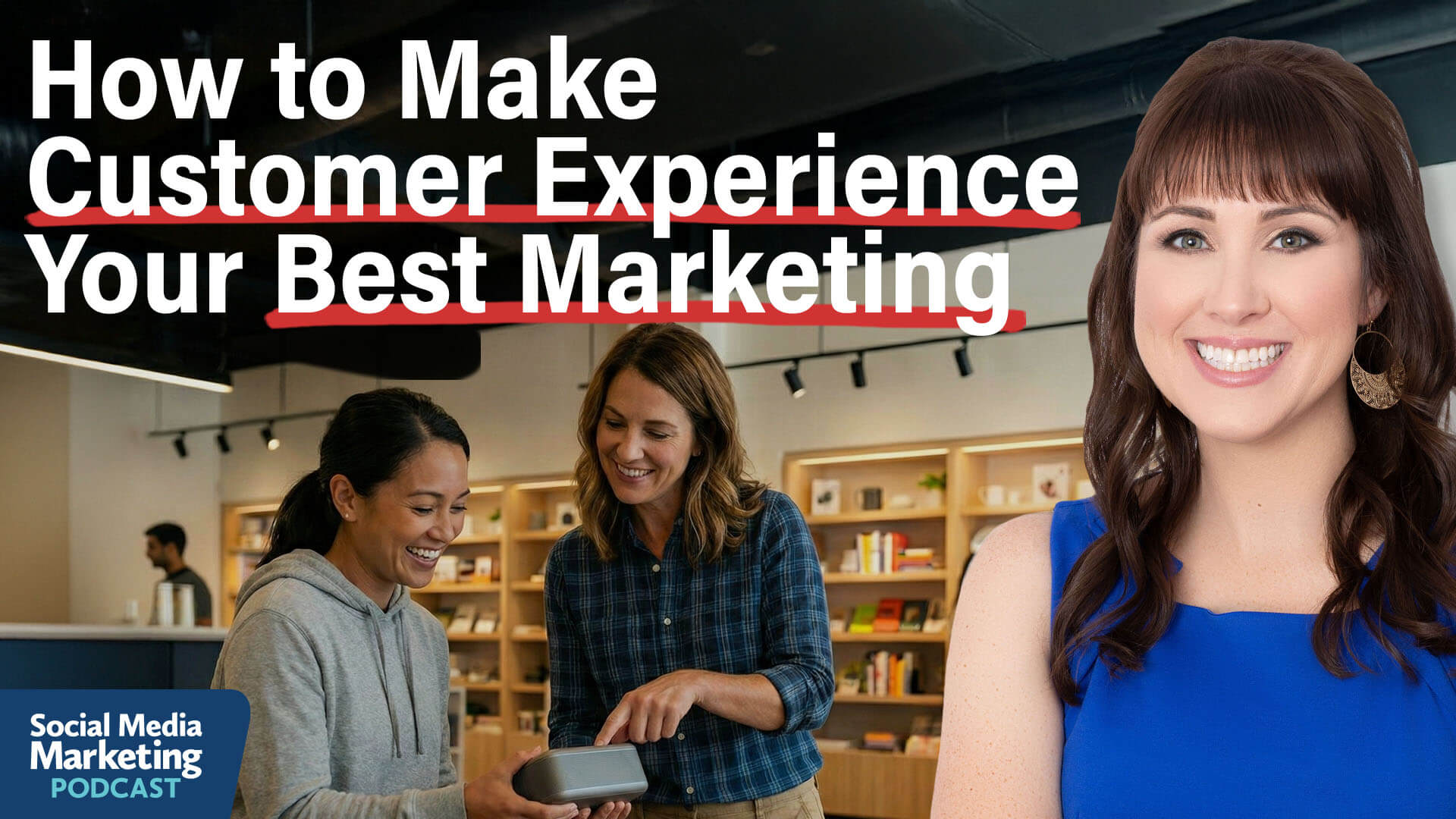
When Customers Create More Customers: Creating Superfans
Marketing generates attention, qualifies prospects, and creates excitement. But it doesn't matter how amazing your marketing campaign is—if someone tries your product and feels disrespected, encounters rudeness, or finds it doesn't live up to expectations, they won't come back, no matter how clever your next campaign is.
Customer experience delivers on the promises marketing makes and creates continuity that lasts.
Every touchpoint from pre-purchase to post-purchase provides evidence that people use to shape how they feel about you and how likely they are to talk about you.
Experience is the number one differentiator between your brand and every other brand, and it's the hardest thing for your competitors to copy. It's also where you have the deepest ability to create superfans.
So, the question you have to ask yourself is, "Is your brand easier to refer or to forget?"
The SUPER Framework for Creating Superfans
If people view your business as a commodity, it's seen as a solution, but not the perfect solution. You want to be seen differently.
Customer experience is how you say to consumers, "We are not a commodity provider. We are a category of one."
The SUPER framework provides five steps to creating customer experiences people will remember, share, and come back for.
S - Story
U - Understand
P - Personalize
E - Expectations
R - Repeat
Each element builds upon the previous one, much like steps on a ladder or layers in a pyramid.
Personalize
Personalization is about making each customer feel like your most important one, even when operating at scale with hundreds of thousands of people. It's finding ways to make them think, "Oh, wow, this was a little easier than I expected" or "This was a little more delightful."
Personalization can be categorized into two main buckets: high-tech and high-touch. Smart companies consider how these buckets overlap, because when high tech and high touch work together, they create the highest degree of impact.
Here are three examples for inspiration.
High Tech + High Touch: The Hot Chocolate Maker
A hot chocolate maker company sends emails with video content to customers at each stage of their order journey.
On package delivery day, the company sends: "Your order delivers today! We thought you might want to take a couple of minutes to watch this unboxing video so you know exactly what's in the box."
After delivery, the next email says: "OK, we know you want to get started as soon as possible. So here are a few quick and easy recipes you can make with your cocoa maker."
Instead of sending an inventory of what was ordered and a tracking number, the company delivers the right content at the right time based on information from different systems it has access to.
High Touch: The Car Wash
A car wash manager was looking for ways to keep subscribers longer.
Now, when someone goes through the car wash tunnel with a kid, the attendant drying the car hands the kid a Hot Wheels car and says, "Mom and dad are doing a great job keeping their car clean. I want you to keep this car clean for me." This simple gesture has a dramatic impact on retention and repeat visits.
High Touch vs. High Tech: The Realtors
Two real estate agents Brittany spoke to execute a similar high-touch in very different ways.
One agent's favorite closing gift involves having Etsy artisans create a replica of the new home as a birdhouse for the front yard.
Another realtor buys new homeowners a Birdbuddy feeder, then swaps postcards of birds with them from her own feeder.
One execution is high-touch, while the other is high-tech. Both executions have a high impact because they feel personalized and connect each realtor's story to their customer's story.
Repeat
Elizabeth Arden said, "Repetition makes reputation and reputation makes customers."
That principle holds true today. Repetition isn't boring—repetition is branding, and your consistent execution of a predictable customer experience builds superfans.
You can't exceed expectations once and declare victory. You'll have to put systems and processes in place to turn everyone on your team into what Hodak calls "the acting chief of experience."
Other topics discussed include:
-
Start With Your Story: The Brick and Mortar Clothing Store
-
Understand Your Customer's Story: The Cookie Shop
-
Exceed Expectations: The Roofing Company & The Plumber
Today's advice is provided with insights from Brittany Hodak, a featured guest on the Social Media Marketing Podcast.


OpenAI to Test Ads in ChatGPT's Free and Go Tiers While Expanding Go Access Globally: OpenAI is rolling out ChatGPT Go—a low-cost $8/month tier with added features like memory, image creation, and file uploads—to the U.S. and all ChatGPT-supported regions. To help fund broader access, the company will begin testing ads in the free and Go tiers, showing clearly labeled sponsored content at the bottom of responses. Ads will not influence answers, and user data remains private from advertisers. OpenAI
Google Debuts Gemini's Personal Intelligence with App Connections: Google has introduced Personal Intelligence, a new Gemini feature that integrates data from Gmail, Photos, YouTube, and Search to deliver personalized assistance. Available in beta to U.S. AI Pro and Ultra subscribers, Gemini can now reason across connected apps to handle complex, contextual tasks—like surfacing license plate photos or planning travel based on past behavior. Privacy remains central: the feature is opt-in, with controls to manage data access and no training on user content. Google plans to expand access and integrate this functionality into AI Mode in Search soon. Google
Facebook Reels Boosts Personalization with New Interest Feedback Model: Facebook has introduced the User True Interest Survey (UTIS) model to enhance video recommendations on Reels by directly incorporating user perception. Unlike conventional engagement-based signals, UTIS uses real-time survey responses to improve content matching based on interest, mood, style, and more. Integrated into both early and late-stage ranking systems, the model has led to higher accuracy, more niche content delivery, and improved user engagement. Large-scale testing confirmed its success, with significant gains in retention and satisfaction. Meta
Edits Adds Clickable Links, Weekly Ideas, and More Effects: Edits is rolling out several updates aimed at streamlining content creation and boosting creativity. Users can now embed clickable overlays linking to Instagram accounts or public reels when exporting videos. A new "Weekly Ideas" feature suggests 10 personalized content ideas based on previously shared Reels. The update also introduces 25 creative video effects like bounce and fisheye, along with enhanced storyboard functionality that lets users add multiple takes of clips and choose their favorites during editing. Instagram
Instagram Lets Users Customize Their Reels Algorithm: Instagram has launched a new tool that lets users view and edit the topics influencing their Reels algorithm. By accessing the feature from the top right corner of the Reels tab, users can now adjust their content preferences to better reflect their interests. The update is currently available to English-speaking users in most regions. Instagram via Threads
Wikipedia Turns 25 with New Enterprise API Partners Including Meta: As Wikipedia celebrates 25 years of accessible, human-curated knowledge, the Wikimedia Foundation has announced new Wikimedia Enterprise partnerships with Amazon, Meta, Microsoft, Mistral AI, and Perplexity. These companies join a growing roster of organizations using high-throughput APIs to integrate Wikipedia's content into AI systems, search engines, and other applications. Wikimedia Enterprise provides scalable, real-time access to Wikipedia and related projects, reinforcing the platform's role as a critical dataset in the AI era. Wikimedia
Google Ads Adds Campaign Total Budgets for Fixed-Time Campaign Control: Google Ads has introduced Campaign Total Budgets, giving advertisers the option to set a fixed budget for the entire campaign period. Unlike average daily budgets, this method adjusts daily spend dynamically based on time and spend remaining, with no risk of exceeding the total budget. This setup is ideal for advertisers with a firm budget and timeframe. Once selected during campaign creation, the budget type cannot be changed. For those needing more flexibility, average daily budgets with daily and monthly caps remain available. Google
Digg Reboots as Reddit Rival with AI Trust Signals and Public Communities: Digg has reemerged under founder Kevin Rose and Reddit co-founder Alexis Ohanian, launching a public beta that offers Reddit-style community features with a modern twist. Designed to tackle today's social media issues, the new Digg incorporates AI tools and innovative verification methods—like zero-knowledge proofs and product ownership checks—to build trust without traditional identity checks. Users can now create and manage their own niche communities with public moderation logs and personalization features. TechCrunch
TikTok Shop Unveils New AI Tools and Selling Efficiencies for 2026: TikTok Shop has launched a series of seller-focused updates designed to boost efficiency and drive sales. Key highlights include AI Fashion Video Maker for converting product photos into shoppable videos and AI Dubbing to voice-over product content without manual effort. Sellers can now use a CRM tool for personalized outreach, List with AI to generate product listings from minimal input, and auto-integrated GMV Max Ads to amplify campaign visibility. Other updates include importing reviews via Judge.me for social proof and grouping sample orders to reduce shipping costs. TikTok
YouTube Rolls Out Interest Targeting and AI Video Tools for Creators: YouTube has launched Interest Targeting in its Promote tool, allowing creators to advertise content to viewers with specific interests, such as food, gaming, or travel. The feature, initially available on desktop, aims to help creators reach more relevant audiences, though views and subscribers from Promote don't count toward Partner Program eligibility. Additionally, YouTube is bringing its Ingredients to Video feature to Shorts and the YouTube Create app, enabling users to generate 8-second AI videos from text prompts and images using its latest Veo GenAI models. YouTube
YouTube Adds New Controls and Content Standards for Teen Viewers: Parents can now limit the time teens spend scrolling Shorts, including the option to block it entirely—an industry first. Additional wellbeing features include customizable Bedtime and Take a Break reminders. YouTube is also introducing content quality principles developed with experts to promote enriching videos and inform its recommendation system. A streamlined setup will soon make it easier to manage multiple kid and teen accounts within the app. YouTube
YouTube Eases Monetization Rules for Sensitive but Non-Graphic Content: YouTube has updated its advertiser-friendly guidelines, allowing full monetization of content that discusses or dramatizes controversial topics when presented in a non-graphic manner. YouTube says the move reflects advertiser comfort with responsible storytelling and a commitment to evolving its policies based on creator input. YouTube
What Did You Think of Today's Newsletter?
Michael Stelzner, Founder and CEO
P.S. Add
michael@socialmediaexaminer.com into your contacts list. Use Gmail?
Go here to add us as a contact.
We publish updates with links for our new posts and content from partners. Your information: Email:
tukangpostemel@gmail.com Opted in on: 2021-09-06 17:03:43 UTC.




