Today's Guide to the Marketing Jungle from Social Media Examiner... | Presented by |  |
It's International 🧢 👒 🎩 Hat Day, Alluser! What's on your noggin?
In today's edition:
All public Instagram Reels are ⤵️ downloadable
-
Today's 👉 Tip of the Day is for LinkedIn
-
4 ways to use 🪹 scarcity in your marketing
-
⚙️ A marketing system that delivers results
-
YouTube ads that 🎯 qualify viewers
-
📒 Notes rolls out to Meta's Messenger users
-
TikTok's mobile effect editor now available on 📱 iOS and Android
-
📝 Claude.ai gets an upgrade
-
Hobbies data will be ❌ removed from Facebook
-
Meta released its 🔎 content library with API access
-
All public Instagram Reels are ⤵️ downloadable
-
Snapchat tests an 🚫 ad-free feed
-
👆 Custom feed controls for TikTok
-
X/Twitter brings back 🔗 links in headlines

Want to position yourself as an industry leader on LinkedIn? Wondering what types of content you can write about?
5 Types of Thought Leadership Content on LinkedIn
-
Share your insights on industry trends and emerging issues and tie them to strategic considerations.
-
Tap into your experience to discuss valuable leadership, management, and business philosophy lessons.
-
Summarize key concepts from the books you're reading and relate them to business leadership.
-
Weigh in thoughtfully on provocative topics like AI, remote work, inclusion, etc.
-
Open up about challenges you're facing. Being vulnerable, curious, and honest can elicit engagement, especially when you ask open-ended questions.
Today's tip is inspired by Richard Bliss, a featured speaker at Social Media Marketing World.
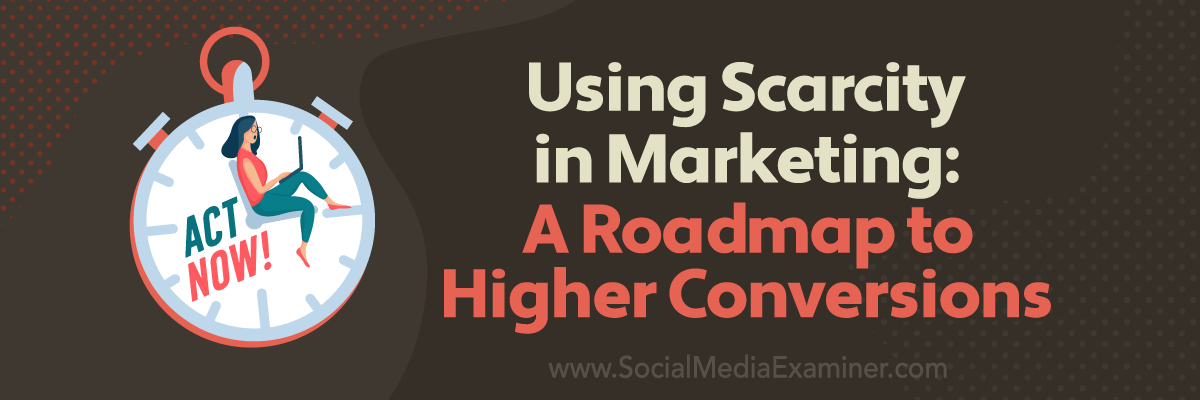
Would you like to get more online sales by ethically hacking your customers' psychology? You can use the psychological power of scarcity to get your message across to customers, whatever your business is.
The Psychology of Scarcity
Scarcity is a compelling motivator. It affects how we value commodities, make decisions, and spend our money—all without even realizing it.
That's because scarcity is a primal part of our psyche. Our brains are designed to overcome scarcity by finding essential resources such as food, water, and shelter. We value these things highly and we make decisions that optimize our chances of getting them.
But the same psychological process happens when something scarce is vital to survival (such as water) as when something scarce isn't essential (such as a new pair of jeans). Our scarcity response is triggered whenever something is in short supply, hard to obtain, or restricted in any way. It doesn't matter what that "something" is. We want it because it's scarce.
Why Scarcity Makes it Easier to Sell to Consumers
First, scarcity triggers our brains to make decisions faster, according to neurological studies. We skip our normal decision-making processes and go straight to "yes" or "no."
Second, when something is scarce, we judge it to have a higher value. So if you want customers to value your products, use scarcity in your marketing.
Third, creating scarcity can help build community. When only a few people can get access to a scarce resource, they feel connected to each other as part of an exclusive group.
Finally, we feel excited about getting access to scarce resources. You can leverage this to build relationships with existing customers by letting them know when a product is scarce or when scarce products are coming into stock.
4 Ways to Use Scarcity in Your Marketing
There are different types of scarcity and different audiences will respond to them in different ways. You need to figure out which type will connect with your ideal customers. In some cases, you can even combine types of scarcity to create an ultra-powerful campaign with broad appeal. But be careful: the wrong type of scarcity could accidentally turn customers off of your brand.
Time-Related Scarcity Marketing Campaigns
With time-related scarcity, your customers are against the clock. The product or service is only available for a limited time and they don't want to miss out. This tactic also taps into the psychology behind loss aversion. Our fear of losing out is even stronger than the pleasure of getting what we want. For example:
-
A countdown timer on your website landing page or eCommerce shop that counts down to the beginning or end of a sale or product release
-
A flash sale that only runs for 24 hours
-
Coupons with an expiry date to encourage more repeat customers
-
Products or content that's only available for a short time such as seasonal specials
Supply-Related Scarcity Marketing Campaigns
Supply-related scarcity is closely linked to the phenomenon of conspicuous consumption. In conspicuous consumption, people buy and use goods to show off their status in society. For example:
-
Exclusive product drops
-
Beta access to content or services that are still in development (This is a great way to combine word-of-mouth marketing with customer research, too!)
-
Waiting lists for popular products, especially luxury items such as watches or bags
-
Caps on the number of community members, course participants, or business clients; for example, some gyms limit their membership
Limited Edition Marketing Campaigns
Limited edition campaigns are a type of supply-related scarcity but they're powerful and distinctive enough to deserve their own mention. For example:
-
Local editions of national or global products such as the different versions of Monopoly adapted for different cities
-
Bundling courses or services under a particular theme
-
Collaborations with online creators and influencers
-
Collaborations with other brands
Demand-Related Scarcity Marketing Campaigns
Demand-related scarcity works best on customers who are conformists. They want to be inside the group. They want to feel included. They're most likely to check reviews, look for social proof, and get word-of-mouth recommendations before they make a purchase. For example:
-
Waitlists for popular products, places for a course, or seats at an event
-
Pre-orders for products that are expected to be in high demand
-
Labeling products or courses to show consumers which ones are most popular
-
Sending emails to remind consumers when a product is almost out of stock or comes back into stock
Today's advice is provided with insights from Dr. Mindy Weinstein, a featured speaker at Social Media Marketing World.

LAST CHANCE: Subscribers Save Big!
Just a quick reminder. Because you're a valued reader of this newsletter, you can get an extra $100 off your All-Access ticket to Social Media Marketing World.
"The atmosphere of this conference is so upbeat and welcoming. I love the energy! The attention to detail and the genuine care for the community are top-notch. Can't wait for next year!" said Nancy Manos.
Today is the last day! Click the link below and you'll see your extra discount at checkout.
I want to save on my ticket!
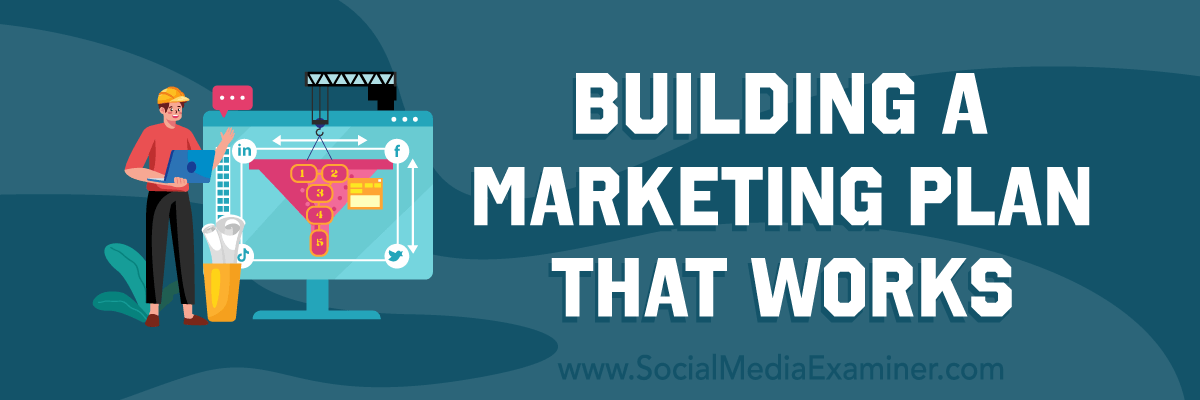
Want to grow your business? Wondering how to set up a marketing system that delivers consistent results?
The most successful businesses on social media didn't get there by following fashions or through luck or intuition. It might seem that way but in fact, everything they do is grounded in strategy. They've picked their platforms, content formats, and messaging—strategically.
Here is a plan to help you do the same.
The 5-Step Marketing Machine
Forget the latest tools and marketing tactics. Forget A/B testing and metrics. Let's talk about the basics: doing the right thing, in the right place, for the right people. That's how you get better results with less effort. That's the digital marketing master plan.
We're going to build a social marketing machine that sells one offer to one segment of your market at a time. It's all about focus and differentiation.
Define Your Business Model
The very first step is defining your business model and finding your unique sales proposition. Ask yourself: What does this business do? How does it provide value for customers? Why should those customers care?
Distill your model down to just one or two key revenue drivers. They could be hero products or your most valuable services. Once you know what to focus on, think about how to differentiate your business from its competitors.
Don't worry about minor products or fringe benefits just yet. They don't bring enough value to your strategy. It's better to excel at one thing than to have a mediocre offer on five different things.
Identify Your Market
When you're defining your market, you'll need to consider three different aspects: demographics, geographic location, and psychographics.
Psychographics are subjective information such as your consumers' attitudes, values, beliefs, lifestyles, affiliations, challenges, worries, and pain points.
Create the Right Message
This stage of the process deserves the most time and effort. You need to come up with a compelling, convincing, and absolutely clear message that taps into your customers' highest hopes and deepest fears; their pain points and problems; and their desires, goals, and aspirations.
The right message will bridge the gap between negatives and positives. It will guide your market from their problems toward a solution—in the form of your business.
Choose Your Media
In the end, the pros and cons of different platforms are irrelevant. Trends are irrelevant. Anecdotal wisdom about the most effective social networks is irrelevant. The only thing that matters is where your audience hangs out. That's where you need to share your message.
If you did the work to define your market, you'll already know exactly where to find them. Of course, there's more to media than just selecting a platform. You also need to think about details such as whether paid or organic content is more effective for your market. What kind of content do they enjoy most: video, images, text, or podcasts? Does long-form or short-form content work better for your message?
Build Your Marketing Machine
You've got your model, your market, your message, and your media. Now it's time to put all the pieces together.
Start by deciding what you want from customers. Then, reverse-engineer their journey to create a marketing funnel. Let's say that you want people to sign up for a masterclass. That's going to bring in some money and give you opportunities to cross-sell, upsell, or get referrals.
Now take a step back. How do people get to the masterclass? Maybe they had to go through a sales call. How did they schedule that? They clicked a link from a webinar. OK, how did they find the webinar? Keep following the steps back until you have a complete customer journey.
In 9 cases out of 10, you'll end up with a pretty classic marketing funnel that starts with social media, offers a lead magnet, and ends with owning the lead. But the key difference is that it's been designed with the customer journey and end goal in mind. It's not just a standard template where you've slotted in different scraps of content.
Today's advice is provided with insights from Adam Erhart.
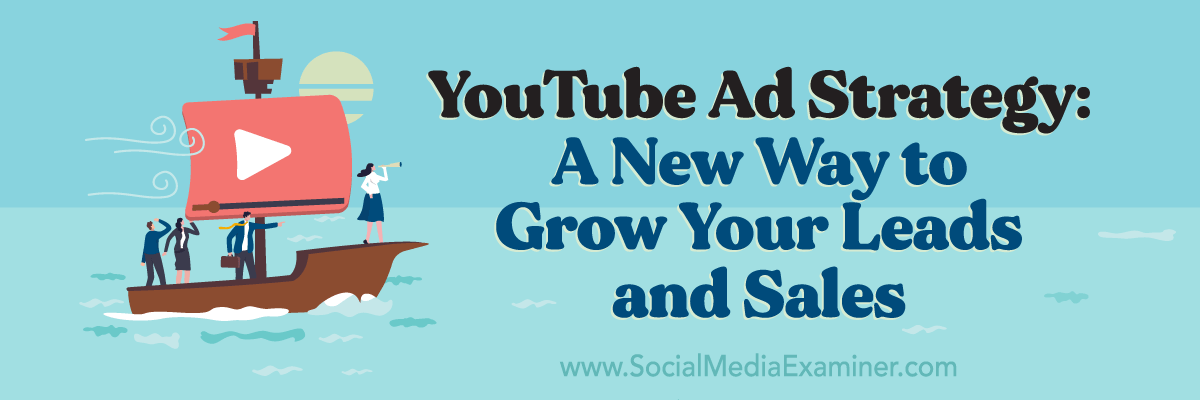
What makes YouTube so competitive? It's a magic formula of social media plus search. Users go there to share, discuss, and be entertained… and to learn, discover, and research. YouTube users are uniquely purposeful. They use the platform with clear search intent, even its social features. They're looking for answers and solutions.
Wondering how to create YouTube advertising content that qualifies those viewers before they click through to your website?
Create a Perfect User Journey on YouTube
The most effective video ads strategy in 2023 is to nurture your leads on the platform for as long as possible. Then, when you do get those few, expensive clicks, they're guaranteed to convert into sales.
Do Your Keyword Research on YouTube
The most effective keyword research tool for YouTube is YouTube itself.
Type a seed keyword or short-tail phrase of eight words or less into the YouTube search bar, then look at the first few results. Make notes about which keywords or phrases, title formats, thumbnails, and visual trends are most popular.
Use this information to come up with a video title, based on your original seed keyword, as well as a video thumbnail and outline.
Thousands of words have been written about how to design the most effective YouTube thumbnail. In the end, it comes down to just a few basic points.
-
Use a candid shot from the video, showing a human face. The thumbnail should never be staged or faceless.
-
Add some color, graphics, and maybe even some text or emojis to catch viewers' attention and show your expertise. Specific numbers and charts can be powerful. Just don't overcrowd the image.
-
Make the thumbnail specific to your topic. Don't use vague phrases or stock images that will leave viewers wondering what your video is about.
Once you have the right keywords, title, and thumbnail, all that's left to do is create the YouTube video itself designed for maximum retention.
Pro Tip: Remember to use the keywords you found in your YouTube search results to target your ad content users will see your ads when they search with these keywords.
Create a 10-Minute YouTube Ad in 7 Steps
You're not trying to create 30 seconds of easy entertainment with a logo at the end. You're creating a video that guides users through the buyer's journey, all before they even leave YouTube. The ADUCATE framework walks you through it.
Attention. Use the video keywords and titles in the first three seconds. Don't waste any time introducing yourself, explaining what you're going to talk about, or showing a logo. You'll lose viewers immediately. Just get straight into the value.
Demonstration. This is the biggest part of your video outline. Break down your product, service, course content, or coaching approach. Tell people why your offer is valuable or important; what they need to know about it; and how they can use it. Then clinch the deal by talking about what if. What will your offer do for them? What will they achieve or not achieve, by making a purchase?
Unique. Next, talk about what makes you or your brand unique. If you don't appear unique, then viewers have no reason to choose you over the competition. This is a good time to talk about your motivation, purpose, values, and viewpoint. As well as building authority, you'll also lay the foundation for an emotional connection with your audience.
Customer. Your ads aren't just to attract viewers. They're also intended to qualify your leads. Your targets are people who understand your offer, want it, and are ready to take action to get it. The most effective way to filter your leads with YouTube content is to say so upfront. Use phrases like "These are the people I want to work with…" You can also speak to people who are not as far along in the buyer's journey by sharing your own business story so they can relate.
Adapt. Vulnerability is an important part of emotional connection. So you'll need to share some of the lows from your story if you want to relate to viewers. Talk about your prototypes, test runs, mistakes, and struggles. Be real about any initial drawbacks of your product.
Trust. Once you've shared some vulnerability, you can establish trust. Start by explaining how you fixed the problems that you just described. Bring in social proof such as press, reviews, testimonials, and awards to show that you overcame the challenges successfully.
Exit. Finally, tell people what you want them to do next: subscribe, watch another video, or maybe even click that link. Remind them what your ideal customer looks like and sweeten the deal with any bonuses, offers, or guarantees.
Once you're used to outlining videos with the ADUCATE framework, you'll be able to spend most of your time on the Attention and Demonstration phases. You can get from Unique to Exit in as little as two minutes!
The result will be engaging, expert videos with a high retention rate. And when you do get clicks, they'll convert into sales. Video ads may be changing, but with this YouTube ad strategy, your business can handle it.
Today's advice is provided with insights from Tom Breeze.

🗞 Messenger Notes: The Notes feature has officially rolled out to Messenger. Source: Messenger via Twitter
🗞 TikTok Mobile Effect Editor: Last year, TikTok launched Effect House, a desktop platform that enabled anyone to create effects for the app. Now, TikTok has introduced a new mobile effect creation experience directly within the TikTok app. This allows creators globally to make effects without downloading another tool. The updated TikTok app (versions 32.1 on Android and 32.0 on iOS) offers an intuitive interface with advanced features to make effect creation easily accessible. Users can add special effects, work with templates, and utilize a library of over 2,000 assets. They can also set triggers to build interactive effects. By bringing effect creation capabilities natively into the app, TikTok aims to empower more of its community to become effect creators and drive trends on the platform. Source: TikTok
🗞 Anthropic Releases Major Upgrades to Claude AI Assistant: Anthropic has released Claude 2.1, the latest version of its AI assistant, with several major upgrades. Claude 2.1 now supports a 200,000 token context window, enabling users to upload long, complex documents like codebases, financial statements, and books for Claude to summarize, answer questions on, and more. The model also demonstrates a 2x decrease in false statements and 3–4x lower rates of mistaken conclusions compared to Claude 2.0. Developers get new features like tool use to integrate Claude with APIs and products, as well as a streamlined workbench to iterate on prompts faster. System prompts also allow custom instructions to Claude to improve performance for specific user needs. Claude 2.1 brings more accuracy and reliability through reductions in hallucinations and misunderstandings especially for lengthy, technical documents. Source: Anthropic
🗞 Meta Removes Hobbies: Beginning December 13, Meta is removing Hobbies from Facebook profiles. Source: theahmedghanem via Social Media Today
🗞 Research Tools from Meta: Meta has launched new research tools called the Meta Content Library and API that provide access to public content from Facebook Pages, Posts, Groups, and Events as well as Instagram creator and business accounts. The tools allow researchers to view near real-time content along with engagement details like number of reactions, shares, comments, and, for the first time, Facebook post view counts. Researchers can search, explore, and filter Facebook and Instagram public content through either a graphical user interface (UI) or via API access. The goal of the tools is to aid research using insights from public posts and engagement on the Meta-owned platforms. Source: Meta
🗞 Instagram Enables Global Reels Downloads: Instagram head Adam Mosseri announced that as of this week the platform globally allows users to download public Reels videos to their devices, no longer limiting saves to the app. Downloaded Reels will feature an Instagram watermark with the account name, similar to TikTok. Users can tap the share button on any Reel and select "download" to save a copy. Accounts can disable the download feature for their content within privacy settings. However, licensed audio will be removed from downloaded Reels, with only original audio tracks included. The rollout marks an expansion of Instagram Reels capabilities as it continues to take on TikTok. Source: TechCrunch
🗞 Snapchat Testing Paid Ad-Free Subscription: Snapchat has started testing a new premium subscription plan called Snapchat+ in Australia that offers an ad-free experience for AUD $10.50 per month. While sponsored places and AI responses may still be present, the tier removes ads from Stories and Lenses. Snapchat+ also provides lower-priced monthly and annual plans that retain full advertising. The ad-free option, which can be canceled anytime, is currently only available in Australia as Snapchat evaluates demand and potential impact on ad revenue. Expansion plans for the Snapchat+ paid tier to other countries remain unclear. Source: Search Engine Land
🗞 TikTok Adds Custom Feed Option: A setting within the "For You" page enables users to provide written guidance on the types of content they want to see more or less of in their feed. Users can enter simple text prompts like "show me more cooking videos" and TikTok will adjust recommendations accordingly, even allowing requests for certain types of content for set periods of time. This conversational approach to customizing one's feed aligns with the interface of ChatGPT and other AI tools, moving away from reliance on opaque user engagement metrics. The new feature provides more transparency and control to shape a preferred TikTok experience. Source: Social Media Today
🗞 X/Twitter to Resume Displaying Link Headlines: Twitter CEO Elon Musk stated that the platform will soon reinstate the practice of showing headlines for linked articles in preview cards, after removing them in October for "improved aesthetics." Musk did not provide an exact timeline for the change but said an upcoming update will display titles in the upper portion of URL Cards to provide context. The change reverses a previous decision to require users to click into links to view the accompanying headline. While likely welcomed by publishers, the addition of headlines may undermine recent workaround formats that integrated custom headlines into share card images or tweets. Source: TechCrunch
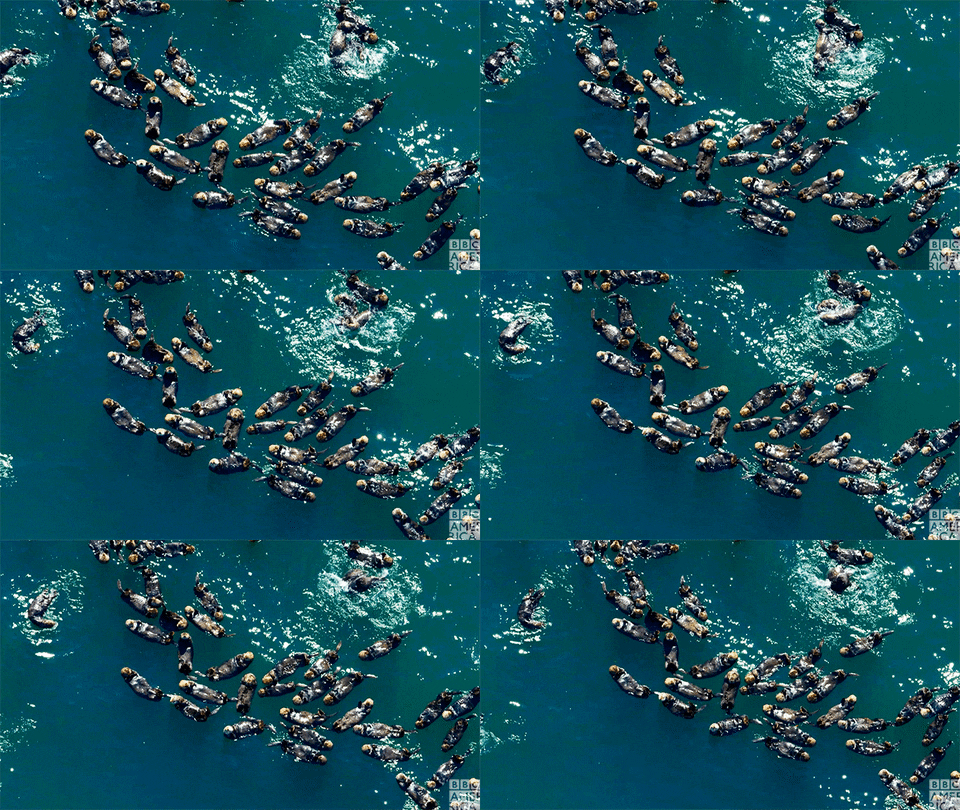
Did You Know?
A group of sea otters resting in the water is called a raft.
Michael Stelzner, Founder and CEO
P.S. Add
michael@socialmediaexaminer.com into your contacts list. Use Gmail?
Go here to add us as a contact.
We publish updates with links for our new posts and content from partners. Your information: Email:
tukangpostemel@gmail.com Opted in on: 2021-09-06 17:03:43 UTC.